


- SMT Splice Tape
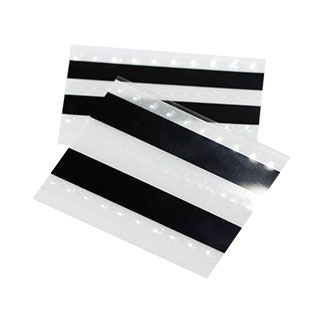
It is suitable for splicing a variety of SMT machine carrier belts
Products variations colors and images without any additional plugins. - Splicing Tape Tool
- SMT Splice Cart
- Cleaning Wipes
8mm SMT splice tape: the complete guide for SMT production lines

 8mm is the most common carrier tape width in SMT production. Chip resistors, capacitors, and small inductors in 0402, 0603, and 0201 packages all ship on 8mm tape. Which means 8mm splice tape is what your operators reach for more than anything else on the production floor.This guide covers what 8mm SMT splice tape actually is, how double-sided and single-sided versions differ, what the raised dot alignment system does, and what to look for when you’re buying in bulk.
What 8mm splice tape is for
When an 8mm component reel runs low, the feeder needs a fresh reel loaded without stopping the pick-and-place machine. The splice tape joins the tail of the old reel to the head of the new one, so the feeder keeps pulling components without interruption.
The splice has to be flat enough to pass through the feeder track without jamming, strong enough to survive the tension cycles, and precise enough that no sprocket holes get blocked. All three of those are harder to get right than they sound.
On most SMT lines, operators splice 8mm tape dozens of times per shift. At that frequency, a mediocre tape shows its problems fast: adhesive that fails under heat, misaligned dots that skip a pitch, or a joint that lifts on the second reel advance. Good splice tape is invisible. Bad splice tape is what you remember.
Double-sided vs. single-sided: which one to use
Most 8mm splice tape sold today is double-sided. There’s a reason for that.
Single-sided tape attaches from the top only. The bottom of the carrier tape is exposed, which means the joint can flex upward under feeder tension. On aggressive feeders, that flex causes component pockets near the splice to misalign with the pick head. The machine either misses the pick or throws a placement error.
Double-sided tape bonds both the top cover and the bottom of the carrier tape simultaneously. The joint stays flat and rigid. The component pockets on either side of the splice stay in pitch.
Single-sided tape still has a place: it works on machines with looser feeder tolerances, or when you’re splicing heat-sealed cover tape and need access to the pocket area during inspection. But for daily production splicing on modern feeders, double-sided is the safer default.
How the raised dot alignment system works
This is the part that separates decent 8mm splice tape from cheap generic tape.
Standard 8mm carrier tape has sprocket holes punched at 2mm pitch along one edge. These holes drive the feeder’s advancement mechanism. If your splice tape misaligns those holes by even half a pitch, the feeder missteps, and the component that should land in the pick position lands in the wrong one.
Quality 8mm double splice tape has two rows of raised dots molded into the adhesive layer. When you position the splice, the dots engage physically with the sprocket holes on both tape ends, half the dots into each side. The tape can’t be applied crooked. It locks into position before you press down.
Once you fold the carrier foil around both tape ends and press the halves together, you get a joint where the sprocket holes on both sides are in perfect sequence. No guesswork. No “close enough.”
Cheap 8mm splice tape skips the raised dots and uses a flat adhesive layer with printed guides. Those printed guides rely on the operator’s eye. In a well-lit, unhurried environment, that’s fine. At 2 AM during third shift, it’s how you get a jam every three splices.
ESD grade: do you actually need it?
Short answer: yes, if you’re handling semiconductors.
8mm carrier tape carries chips. Most of those chips are ESD-sensitive to some degree. If your splice tape generates static during feeder advancement, you can discharge that static directly into components. Whether or not that causes immediate visible damage, it can cause latent failures that show up weeks later in the field.
ESD-grade 8mm splice tape uses a PET film with anti-static surface treatment, typically with a surface resistivity under 10^10 Ω. The yellow color common to ESD splice tape is not a branding choice. It’s a visual indicator that the tape has been treated, so operators can distinguish it from regular adhesive tape.
If your line handles passives only, ESD tape isn’t strictly required. If you’re splicing 8mm tape feeding ICs, microcontrollers, or RF components, use ESD tape. The cost difference per piece is negligible compared to a single field return caused by ESD damage.
Paper vs. embossed plastic: matching the splice tape to the carrier tape
The type of 8mm carrier tape you’re splicing matters.
Paper carrier tape (the beige or brown tape most 0402 and 0603 passives come on) is thinner and more compressible. Standard 8mm double splice tape works directly on paper tape, and the raised dots engage cleanly with the punched sprocket holes.
Embossed plastic carrier tape (the black or clear plastic tape with molded pockets for ICs or connectors) is thicker and stiffer. Some standard splice tapes don’t have enough adhesive thickness to bond reliably to the rigid plastic surface. For embossed plastic 8mm tape, look specifically for splice tape rated for both paper and embossed plastic, or use a splice tape with a thicker adhesive layer.
Using paper-only splice tape on embossed plastic is a common source of splice failures. The bond looks fine when applied, but the stiffer tape peels the joint open after a few feeder cycles.
Machine compatibility
8mm splice tape works across all major SMT platforms because the 8mm carrier tape spec is standardized under EIA-481. The sprocket hole pitch, the tape width, and the pocket position are fixed by the standard.
That said, a few machine families have specific tolerances worth knowing:
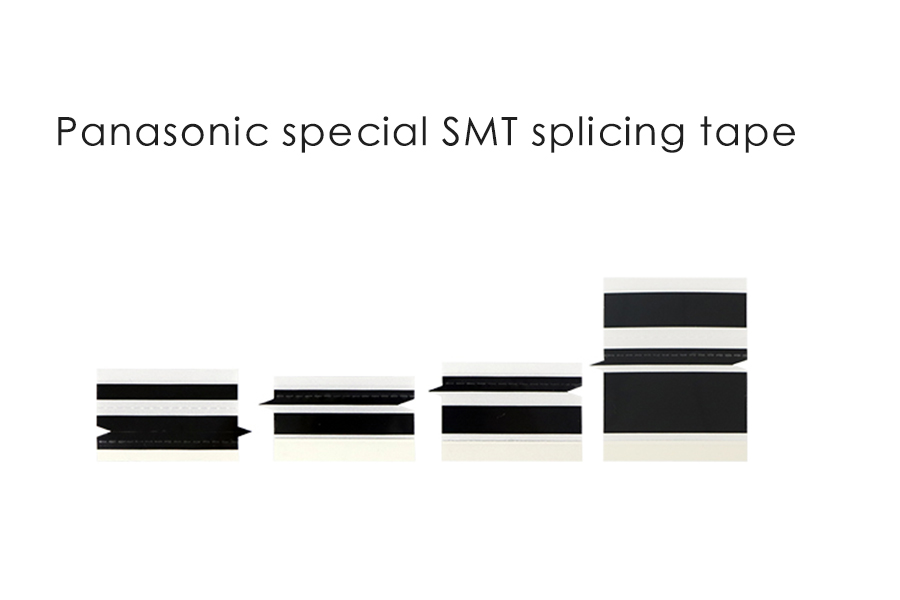
Panasonic NPM and CM series feeders run a tighter sensor check on splice thickness. If the splice adds more than about 0.15mm to the tape stack height, the feeder’s optical sensor flags it as a load error. Use splice tape with a thin PET film base (typically 0.05-0.08mm) on these machines.
Yamaha and JUKI feeders are generally more tolerant of splice thickness variation, but they can have issues with adhesive overhang on 8mm tape if the splice isn’t trimmed cleanly at the edges.
Fuji NXT feeders have a narrow feeder track for 8mm tape, and raised dots that aren’t precisely positioned can catch on the track walls. Source tape with dots that conform to the EIA-481 sprocket hole position, not generic “close enough” positioning.
What to look for when buying in bulk
When you’re ordering 8mm splice tape in box quantities (usually 500 or 1000 pieces per box), a few things matter more than unit price:
The adhesive release liner should peel cleanly and consistently. If the liner tears mid-peel, operators waste tape. On a line doing 50+ splices per shift, liner failures add up fast.
The raised dots should be molded cleanly with consistent height. If you look at a piece of tape and the dots vary visibly in size or shape, the alignment performance will be inconsistent.
Ask about shelf life and storage conditions. Splice tape adhesive degrades in heat and humidity. Reputable suppliers print a manufacture date on the box and recommend storage below 25°C at under 60% RH. If a supplier can’t tell you the manufacture date, that’s a problem.
For ESD tape, ask for the actual surface resistivity measurement. A label that says “ESD” without a number behind it is marketing. The number should be under 10^10 Ω.
For high-volume buyers, the price per piece on 8mm double-sided ESD splice tape (500-piece box) typically runs from $8-25 USD per box depending on supplier and volume tier. Panasonic OEM tape sits at the high end. Well-made third-party tape from specialized manufacturers runs toward the middle. Generic unbranded tape sits at the low end and is where most quality problems originate.
How to store splice tape properly
Splice tape often gets treated like an afterthought consumable, tossed in a drawer next to the barcode scanner. That’s how you end up with a box that’s been through two summers and has adhesive that barely sticks.
Store in the original sealed ESD bag when possible. Keep away from direct sunlight. The ideal storage location is a climate-controlled parts room, not next to the reflow oven. First-in, first-out rotation matters if you keep more than two or three months of stock.
Opened boxes should be kept in a sealed container or zip-lock bag with a silica gel packet. A full box of 500 pieces can last 12-18 months in good storage. In a hot, humid factory environment, expect that to drop to 6-9 months.
Troubleshooting common 8mm splice tape problems
Feeder jams at the splice. Check the raised dots first. If any dot is deformed or missing, the sprocket holes aren’t engaging correctly and the joint is shifting during feed. Replace the splice and check the tape with the lot it came from.
Cover tape lifts off at the splice. This is an adhesive quality issue. The cover tape adhesive on cheap splice tape doesn’t bond reliably to the heat-sealed edge of the original cover tape. Switch to tape with a higher-tack formulation, or use a dedicated cover tape connector at the splice point.
Machine throws a placement error at the splice but no jam. Usually a pitch alignment issue, not an adhesive issue. The sprocket holes look fine, but the pocket position has shifted by one pocket width. The raised dots didn’t engage fully. Re-splice with the tape held taut against a flat surface rather than in the hand.
Splice tape won’t stick to embossed plastic carrier tape. You’re using paper-tape-rated splice tape on a tape that needs more adhesive thickness. Source embossed-compatible tape.
We manufacture 8mm SMT splice tape in double-sided ESD grade, single-sided, and paper-carrier-specific variants. Sizes run from 8mm through 88mm. [Request samples] or [contact us] for volume pricing.














 English
  Arabic
  Russian
  French
  German
  Vietnamese